Loading...
+ Näita rohkem
  • A small description of horseshoe brooches:

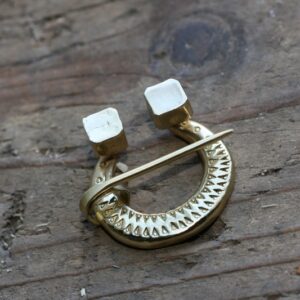
    Wise men say that brooches have been used to fasten clothes for more than 3000 years. The first brooches are thought to be forms of vaulted brooches from the Mediterranean area that date back to around the late 2nd millennium BC, ensuing from the development of fasteners (pins). It was initially a practical item to fasten clothes but soon it was carrying the function of an adornment, it gained popularity and the use of it spread. The first items that bare the similarity to later horseshoe brooches were taken into use around 2000 years ago in the outreach of Provincial Rome. It is known that the first Estonian horseshoe brooches originate from Viru County balustrade tomb. The peak of its popularity lasted from the 8th to the 13th century but they were being worn until the 17th century. Archaeologists have done a great job and found multiple brooches among which the ones in a good shape originate from burials or hidden findings. When found broken, it could have been the case of vandalism or fire burial.
    People are often interested if there were any differences between the men’s and women’s brooches or what the different patterns meant and how the brooches were being worn – heels up or down. It is difficult to truly analyze these patterns as the early wearers of the brooches have been dead for around 1000 years and more, and unable to answer these questions. It is also extremely difficult to make clear distinction between men’s and women’s brooches based on the findings – sometimes we know that the finding belonged to a man or a woman based on the other items along but both genders usually wore the same brooches as it was a daily used fastener. However, based on the findings, it is known that brooches were being worn heels upside.
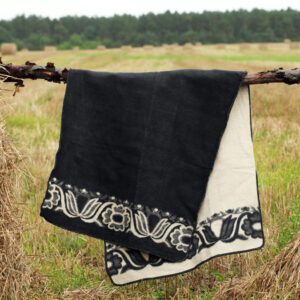
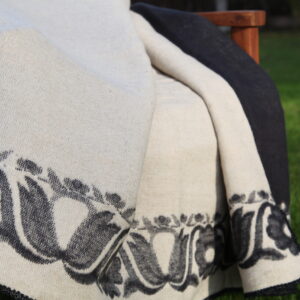
     

  • Dimensions 75 x 180 cm

    70% cotton, 30% flax

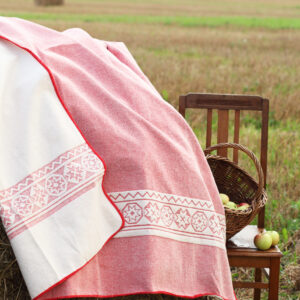
    On the North Estonian scarf, Maarja sleeve pattern, that is notable for its peculiarity, is used. The yarn that was used was woollen, cotton or silk. Often black and combination of two or three colours was used. The black patterns on the sleeves were silk for the rich and sown for the poor people.Wrap was being worn lengthways on one’s back; the corners were secured on the breast with a brooch or yarn. The tradition of wearing wraps remained until the beginning of the 19th
    century.

  •  Dimensions 145 x 200 cm

    70% cotton, 30% flax
    On the North Estonian scarf, Maarja sleeve pattern, that is notable for its peculiarity, is used. The yarn that was used was woollen, cotton or silk. Often black and combination of two or three colours was used. The black patterns on the sleeves were silk for the rich and sown for the poor people.Wrap was being worn lengthways on one’s back; the corners were secured on the breast with a brooch or yarn. The tradition of wearing wraps remained until the beginning of the 19th
    century.

  • Dimensions 70x180 cm

    100% cotton

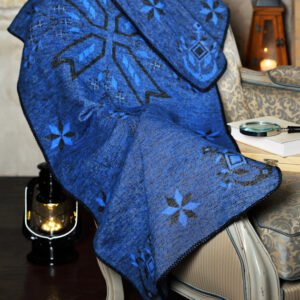
    The story of the Muhu sea blanket is like a rare treasure that has washed ashore. Namely, the language of the birds and the flowers, as well as animal ornamentation, were more often embroidered or woven into a wrap or sõba than images of ships and anchors. Therefore, I was very surprised when I discovered four anchors on a Muhu blanket created by our foremothers. From now on, the four anchors will tell the stories of the sea as part of the Muhu sea blanket created from Ella’s Scarf. They will symbolize the beautiful, real-life stories of the sea that provided coastal peoples with sustenance and also took their lives.
    The stories related to the development of the wraps and scarves are filled with interesting tales about symbols and their methods of creation. Interesting facts are also related to the colours. The blue and black in the sea blanket of Ella’s Scarf conveys important meanings that are deeply connected to Muhu island. The sea blue that appears on the Muhu sea blanket was a very unusual colour at the time. Although many plants have blue blossoms, there are few plants from which a blue colour for dying wool can be produced. In Estonia, as well in the rest of Europe, there basically one plant from which blue dye could easily be made in ancient times – the woad. And Muhu island was one of the few places where this rare plant grew. However, the colour black was gifted to us by Mother Nature by sowing blackish juniper berries on Muhu island.

  • Muhu plaid

    59.00 

    Dimensions 140 x 200 cm


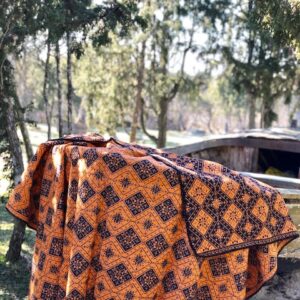
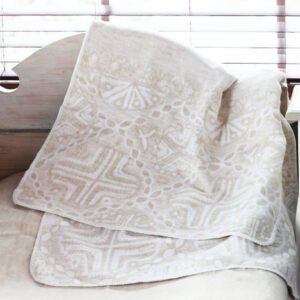
    In Muhu, unlike many other places, wrap and plaid were distinguished - wrap was bigger. Plaid was also being worn across one’s shoulders in this area. Embroidering of plaids was started before the I World War. These plaids were made by professional embroiderers. Embroidery of Muhu is peculiar and characteristic of the people of Muhu Island. The embroidery is divided into two major groups: geometric and plant pattern.The most typical, most used and the oldest geometric pattern motif is closed into an orderly octagon. This motif, that was called Muhu Whisk and was believed to be a sign of luck and rebirth, was often used on woollen plaids.You can see the whisk pattern motif on MUHU scarf.

  • Dimensions 140 x 200 cm 70% cotton, 30% flax In Muhu, unlike many other places, wrap and plaid were distinguished - wrap was bigger. Plaid was also being worn across one’s shoulders in this area. Embroidering of plaids was started before the I World War. These plaids were made by professional embroiderers. Embroidery of Muhu is peculiar and characteristic of the people of Muhu Island. The embroidery is divided into two major groups: geometric and plant pattern.The most typical, most used and the oldest geometric pattern motif is closed into an orderly octagon. This motif, that was called Muhu Whisk and was believed to be a sign of luck and rebirth, was often used on woollen plaids.You can see the whisk pattern motif on MUHU scarf.
  • Dimensions 140 x 200 cm 70% cotton, 30% flax In Muhu, unlike many other places, wrap and plaid were distinguished - wrap was bigger. Plaid was also being worn across one’s shoulders in this area. Embroidering of plaids was started before the I World War. These plaids were made by professional embroiderers. Embroidery of Muhu is peculiar and characteristic of the people of Muhu Island. The embroidery is divided into two major groups: geometric and plant pattern.The most typical, most used and the oldest geometric pattern motif is closed into an orderly octagon. This motif, that was called Muhu Whisk and was believed to be a sign of luck and rebirth, was often used on woollen plaids.You can see the whisk pattern motif on MUHU scarf.
  • Dimensions 140 x 200 cm 70% cotton, 30% flax In Muhu, unlike many other places, wrap and plaid were distinguished - wrap was bigger. Plaid was also being worn across one’s shoulders in this area. Embroidering of plaids was started before the I World War. These plaids were made by professional embroiderers. Embroidery of Muhu is peculiar and characteristic of the people of Muhu Island. The embroidery is divided into two major groups: geometric and plant pattern.The most typical, most used and the oldest geometric pattern motif is closed into an orderly octagon. This motif, that was called Muhu Whisk and was believed to be a sign of luck and rebirth, was often used on woollen plaids.You can see the whisk pattern motif on MUHU scarf.
  • Dimensions 80 x 180 cm

    70% cotton, 30% flax


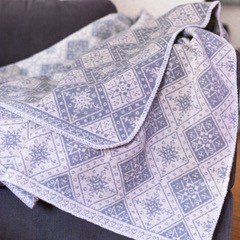
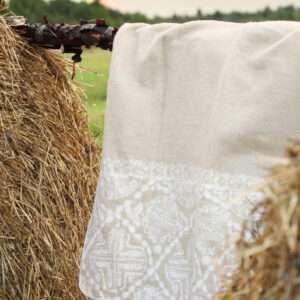
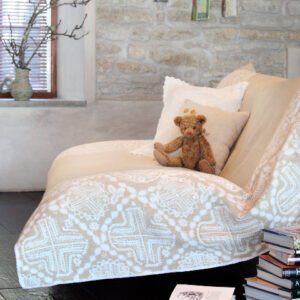
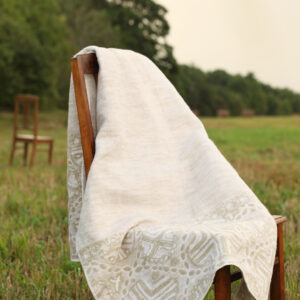
    In South Estonia, festive woollen rectangle wrap, worn across one’s shoulders, was the most respectable garment. In Paistu, even on the 19th century oblong woollen shawls were worn. White shawl was decorated by using archaic techniques and patterns that had a deep meaning. South Estonian scarf is inspired by Paistu apron, where cross (symbol of balance; possesses a protective meaning), circle (symbol of infinity, perfection and harmony) and thuja (symbol of conception and fertility) can be seen. Such shawls were only worn by adult women.
     

  • Dimensions 145 x 200 cm

    70% cotton, 30% flax


    In South Estonia, festive woollen rectangle wrap, worn across one’s shoulders, was the most respectable garment. In Paistu, even on the 19th century oblong woollen shawls were worn. White shawl was decorated by using archaic techniques and patterns that had a deep meaning. South Estonian scarf is inspired by Paistu apron, where cross (symbol of balance; possesses a protective meaning), circle (symbol of infinity, perfection and harmony) and thuja (symbol of conception and fertility) can be seen. Such shawls were only worn by adult women.

  • Dimensions 80 x 180 cm

    70% cotton, 30% flax


    In South Estonia, festive woollen rectangle wrap, worn across one’s shoulders, was the most respectable garment. In Paistu, even on the 19th century oblong woollen shawls were worn. White shawl was decorated by using archaic techniques and patterns that had a deep meaning. South Estonian scarf is inspired by Paistu apron, where cross (symbol of balance; possesses a protective meaning), circle (symbol of infinity, perfection and harmony) and thuja (symbol of conception and fertility) can be seen. Such shawls were only worn by adult women.


  • Dimensions 60 x 180 cm

    70% cotton, 30% flax


    In South Estonia, festive woollen rectangle wrap, worn across one’s shoulders, was the most respectable garment. In Paistu, even on the 19th century oblong woollen shawls were worn. White shawl was decorated by using archaic techniques and patterns that had a deep meaning. South Estonian scarf is inspired by Paistu apron, where cross (symbol of balance; possesses a protective meaning), circle (symbol of infinity, perfection and harmony) and thuja (symbol of conception and fertility) can be seen. Such shawls were only worn by adult women.